Staying uncluttered comes down to six habits: deciding before you buy, keeping a purpose bigger than possessions, running regular maintenance, ignoring the comparison trap, and practising gratitude. A single purge rarely holds, because clutter rebuilds through small daily decisions. If the mess has returned, check the early warning signs of a cluttered home before planning another clear-out.
Decide Before Anything Enters the House
The most reliable protection against clutter is a pause at the point of purchase. People who stay uncluttered treat a non-essential buy as a decision that needs a reason, not a default.
Ask Three Questions Before Every Non-Essential Buy
A short filter does most of the work, provided the same questions are asked every time. Mood, a sale ending tonight or a bad afternoon should play no part in the test.
The filter is deliberately blunt:
Answering honestly matters more than answering quickly. Most regretted purchases pass all three questions only because the answers were generous.
- Will I use this regularly, or only once or twice?
- Does it fit the way I already live and what I already own?
- Will it add something useful, or only take up space?
An item that fails any of the three stays out of the house. That single rule blocks the slow drip of objects that quietly rebuild a cleared room.
None of this is about being frugal for its own sake. It is about whether an object earns the space it will occupy for years.
Give Delayed Decisions a Holding List
Not every purchase deserves an immediate yes or no. A holding list adds a delay without turning the decision into a ban.
Write down the item, the date and the reason it seemed worth buying. Most entries look far less urgent a fortnight later, and the ones that still matter can be bought without guilt.
A holding list also separates wanting an object from wanting the feeling attached to it. The entry that is never bought twice was rarely about the item.
Find Out Which Channel Fills Your Home
Clutter rarely arrives in one delivery. It comes through freebies, duplicates, upgrades and might-need-it-later purchases.
Watch the specific route that fills your rooms. Someone who buys kitchen gadgets out of habit has a different leak from someone who keeps every gift and every plastic takeaway container.
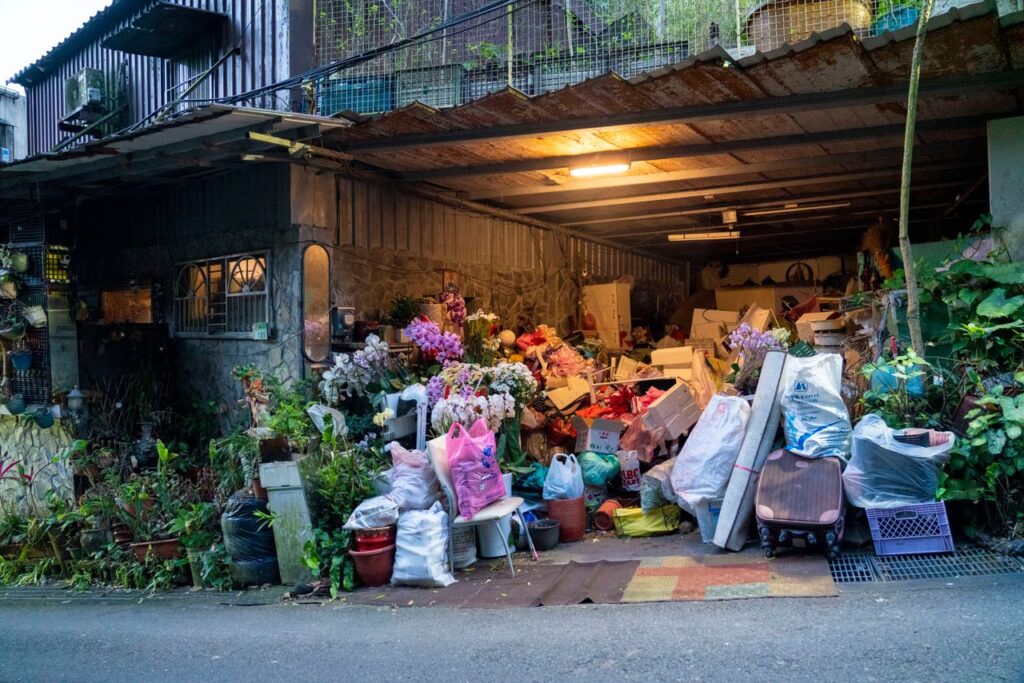
Once the pattern is visible, the next clear-out gets faster. It also explains why certain personality types stall midway through a sort even when they want the same calm result.
Build Rhythms Instead of Relying on One Big Purge
No room stays clear without attention. A purge resets a space, and a rhythm is the thing that keeps it reset.
Match the Frequency to the Speed of the Mess
Different areas collect clutter at different speeds. One whole-house schedule guarantees that some rooms are checked far too often while others are never reached.
| Area | How often | What the check covers |
|---|---|---|
| Kitchen surfaces | Weekly reset | Rubbish, duplicates, items with no home |
| Wardrobe | Seasonal check | What was worn, what was not, repairs needed |
| Garage | Annual clean-out | Boxes not opened, broken tools, spare parts |
| Everything else | When it starts to show | Hallway, drawers, bags, the car |
The schedule matters less than the fact that one exists. A rhythm removes the argument about when to start.
The annual clean-out is the one most homes quietly skip. Skipping it is what turns a storage area into a place nobody wants to open.
Keep the Weekly Reset to a Tidy
The weekly pass is not a declutter. It returns stray items to their places, wipes the surfaces and bins whatever has clearly finished its life.
Anything needing a real decision goes into a box for the next deeper session. The reset stays quick, which is the only reason it keeps happening.
The kitchen pass also catches the small accumulations that never justify their own clear-out: menus, spare chargers, lids without containers.
Make the Seasonal Check Specific
A seasonal wardrobe check works because the season supplies the evidence. Whatever was not worn through the past few months is a candidate to leave.
The garage clean-out follows the same logic. Each box gets one question: has anything inside been used since last year?
Repeating the process beats a heroic one-off attempt, which is why working through a wardrobe in ten steps belongs on a schedule rather than in a single lost weekend.
Point Your Attention at Something Bigger Than the Next Upgrade
When life is organised around the next upgrade, possessions win every argument. A competing purpose makes the upgrade far less persuasive.
Build Commitments That Outlast a Purchase
People who stay uncluttered put their time into things that cannot be stored on a shelf:
- Relationships that need time rather than gifts
- Service to a community or a cause
- Creative work with no shopping list attached
- Faith, study or practice that rewards repetition
- Experiences that are remembered rather than displayed
These commitments take time, which is exactly why they hold. Something is already occupying the space that browsing and buying used to fill.
Choosing that purpose is not a talent reserved for other people. It is a decision about where the next hour and the next spare amount of money go.
Leave the Comparison Loop
Comparison sets the target at whatever someone else owns, and that target moves the moment they buy something new.
The exit is not to own less than everyone around you. It is to stop using other people’s houses, cars and clothes as the measure of your own progress.
Write Down What You Want More Of
A short list of what you actually want this year makes most impulse purchases look like a contradiction. Calm, time, savings and a clear room rarely survive a full trolley of new things.
Keep the list where you shop rather than in a notebook at home. When letting go feels stuck and frustrating, that list is usually what restarts the decision.
Make Maintenance Easier Than Starting Over
Long-term simplicity depends less on willpower than on friction. Every step removed from the process makes the habit more likely to survive a busy month.
Cut the Effort Per Decision
A system that needs a free afternoon will be postponed. A permanent bag, a fixed drop-off point and a small number of containers cut the work per item.
Containers help because they set a limit. A shelf, a box or a drawer that is already full answers the question without any debate.
Keep a Donation Bag by the Door
An empty bag in the hallway turns a decision into one movement. Items leave in the week they are released instead of waiting in a pile on the landing.
Leave Surfaces Half Empty
A surface with genuine free space invites nothing to stay. A surface that is almost full gives every new object a reason to land on it.
Store by Frequency of Use
Daily items belong at hand height and occasional items go high or low. The awkward spaces then stop being used for things you actually need.
Watch What Comes In
Most people count what they throw away and ignore what arrives, then wonder why the total keeps climbing. Count the incoming side instead and the balance changes.
One bag arriving and no bag leaving is the whole mechanism of clutter, seen in miniature.
Changing the environment beats relying on resolve. The passive decluttering strategies that skip the sorting pile work because they make the tidy choice the easy one, and a clear shelf needs no discipline to stay clear.
Practise Gratitude and Let Your Life Do the Impressing
Gratitude is the quietest of the six habits and the one that changes the arithmetic of wanting. It moves attention from what is missing to what is already in the room.
Treat Gratitude as an Inventory
A daily pause over what already works is not sentimental. It is a practical count of what you own and use, and it makes the case for more things weaker.
The craving quiets once the current version of life is named out loud. Clutter loses its foothold when enough is recognised as enough rather than as a starting point for more.
Naming three things that worked today takes less time than one search for something to buy. It also ends the day on the right side of the ledger.
Impress With the Life, Not the Contents
Kindness, integrity, calm and freedom get noticed more than square footage or brand names, and they cost nothing to store.
People who stay uncluttered make that trade deliberately. What others admire over time is the ease of their lives, not the contents of their rooms.
Some people do find releasing easier than others, and the traits shared by people who are good at decluttering are mostly habits rather than talents. Each one can be built in an ordinary week, starting with the next purchase you decide not to make.
Leave a Reply